As temperatures rise and extreme weather becomes more common, Western Colorado's towns and cities face growing challenges in protecting residents, infrastructure, and public spaces. Hotter summers, intense rainstorms, flooding, and limited water resources can place additional pressure on local governments and community infrastructure.
Nature-based solutions bring natural systems back into the places where people live, work, and gather. Through tree planting/urban forestry and natural stormwater management, communities can reduce climate risks while creating healthier, more welcoming places to live.
Managing Urban Heat
Urban heat islands aren’t only an urban phenomenon. They occur in large and small cities and towns and other built environments that absorb and retain more heat than surrounding natural areas. This can make neighborhoods significantly hotter, particularly during summer heat waves, increasing risks for residents who are older, have health vulnerabilities, work outdoors, or lack access to air conditioning.
Cooling strategies can include planting trees for shade, creating water-wise green spaces, opening additional public air-conditioned spaces, reducing heat-absorbing surfaces such as dark asphalt and rooftops, and improving urban design to encourage natural airflow.
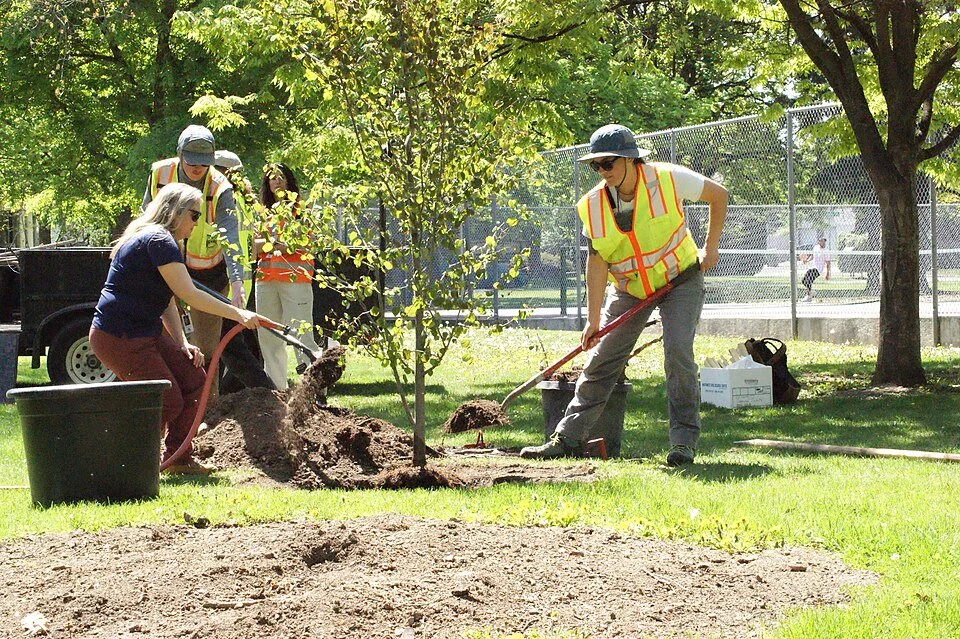
A nature based solution such as planting trees not only reduces urban heat by providing shade, it also improves air quality, captures carbon, and helps absorb stormwater runoff.
The City of Grand Junction received funding through the 2024 Colorado Urban and Community Forestry grant cycle for its Community Urban Canopy Enhancement Project which is under way now.
Managing Stormwater with Natural Infrastructure
Another opportunity for nature-based resilience in towns and cities is improving how communities manage stormwater.
Traditional stormwater infrastructure often moves rainwater away from developed areas as quickly as possible. During intense precipitation events, these systems can become overwhelmed, contributing to localized flooding, erosion, and water quality problems.
Natural infrastructure such as bioswales can help capture and slow runoff, allowing more water to infiltrate into the ground. These swales can reduce pressure on drainage systems while filtering pollutants and creating additional green space.
Examples of bioswales in Western Colorado can be found at Grand Junction library’s demonstration garden. Take a virtual tour of the garden here!
Funding opportunities for greener communities
There are several funding opportunities in Colorado to bring these solutions to your town or city they include:
USDA Forest Service: Federal support through state-administered urban and community forestry programs
This program supports implementation of the Colorado Water Plan with two grant cycles each year, with deadlines on July 1 and December 1. Projects being considered in 2026 include agriculture, conservation and land use planning, engagement and innovation, storage and supply, and watershed health and recreation.
Proposition 137: Colorado voters recently approved this measure that will redirect $200 million in current revenue to funding for conservation, water, forests, and wildfire prevention — potentially supporting community-level investments in natural infrastructure as well as in other nature-based solutions.
Fulcrum Rural Solutions can help communities build plans for similar nature-based solutions projects in your town or city
Our services can support local nature-based solutions through:
Stakeholder outreach and issue discovery
Strategic development and advocacy communications
Grant identification and proposal development
Workshops and trainings
Together we can create healthier places to live while preparing for a changing climate.
Do you want to bring similar projects to your town or city? Reach out here.
