Ag Land Conservation is Climate Resilience
May 25, 2026
Sometimes climate change feels daunting. A force beyond our control, coming due. And it is true that the amount of greenhouse gases that humans have dumped into our thin atmosphere in the past 100 years or so already means that the heating world is impacting weather and other systems, both natural and human. Climate action is not pointless. But it is also not inevitable.
In the Field - Local Farm Conservation Working for the Gunnison Basin
Land conservation is one way that we can slow the warming of the planet and reduce the extent of further harm. Conservation builds more resilient natural systems that both mitigate against worsening impacts and that adapt systems to effects that are here and coming.
That work is already happening in the Gunnison Basin where four conservation easements recently closed on private lands in the past two years.
Kropp family orchard — Just outside the popular Town of Paonia this 30-acre tract of organic farmland faced the risk of being subdivided and converted to 7-acre ranchettes–in an area with a 120 year orchard economy and heritage. Saved through a three-way partnership: Dirt Capital Partners acquired the property, Colorado West Land Trust placed the easement, and the Kropp family of First Fruits Organics continues to lease it, now with a path to ownership.
“You know, this soil here is like four or five feet deep. The water rights are phenomenal. ...it's just one of those places that shouldn't grow houses. It should grow crops.” -Kris Kropp
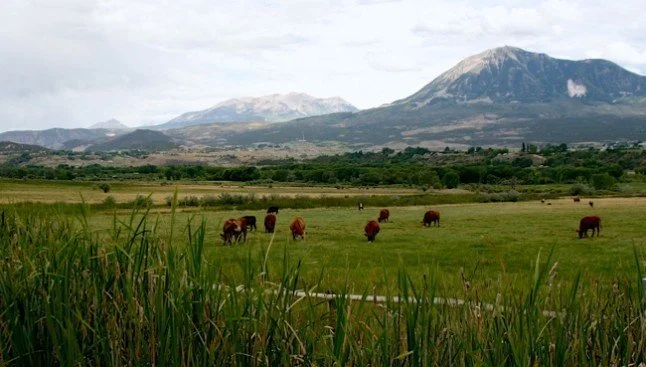
Buck Creek Ranch — Nearly 500 acres on Highway 133 between Paonia Reservoir and McClure Pass is a working cow-calf and hay operation with senior water rights from East Muddy Creek and Buck Creek. The easement borders the U.S. Forest Service Raggeds Wilderness and includes 182 irrigated acres that create seasonal wetlands for wildlife.
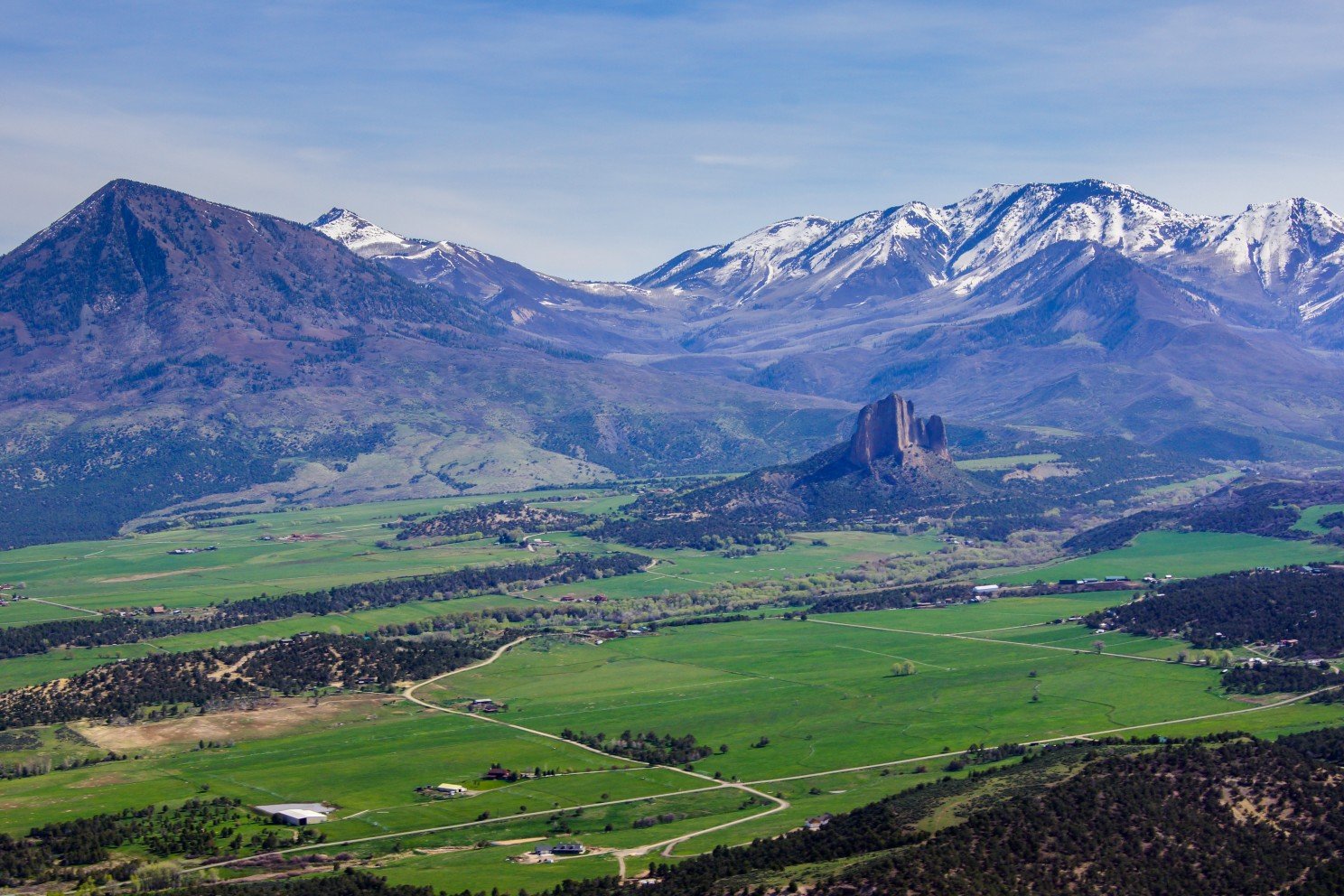
The Smith Fork Valley with Needle Rock (US BLM Outstanding Natural Area) and the USFS West Elk Wilderness in the background. Private and public lands are closely integrated in rural Colorado.
Scenic Mesa Ranch — 7,400+ acres south of Hotchkiss adjacent to more than 13,000 acres of already-conserved public lands, the ranch borders the U.S. Bureau of Land Management’s Gunnison Gorge National Conservation Area and connects lower-elevation public land to the USFS West Elk Wilderness.
Ozyp Farms — Southwest of the City of Gunnison, this 213 acres working sheep ranch and greenhouse operation sits within the Gunnison Basin Priority Conservation Area, providing critical brood-rearing habitat for the federally threatened Gunnison sage-grouse.
The science on conservation is straightforward with wins for habitat and farmland protections that are significant. These four easements represent over 8,000 strategically important acres across four transactions made possible through partnerships with farmers, funders and the phenomenal work of the Colorado West Land Trust. You can support that work here. But the benefits don’t stop with just the protected land or the preserved agricultural character.
Firstly, conserved land holds water. In the arid West, that's not an abstraction — it's the difference between a stream that runs through August and one that doesn't. Research from the Gunnison Basin, published in the Journal of Restoration Ecology, found that low-tech restoration structures successfully rewetted streams and wet meadows even when six of nine monitored years were drought years.
The Nature Conservancy's riparian work across Colorado — slowing snowmelt, settling sediment, keeping water in the landscape longer — points to the same mechanism at a broader scale. When ranches stay ranches, when irrigated fields keep irrigating, when riparian corridors stay intact, water moves through the system more slowly and more completely. That's drought resilience, built from the ground up, one conserved property at a time.
Land conservation and wildfire planning works the same way. The Forest Service's Wildfire Crisis Strategy is built on an all-lands premise: fire doesn't stop at a fence line. Managing risk on public land alone isn't enough.
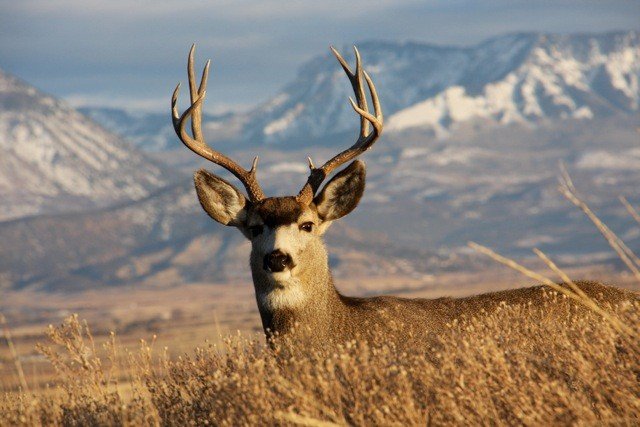
Wildlife depend on private and public lands. Ranches in the North and Smith Fork Valleys rely on waters that flow from the West Elk Wilderness and the wildlife depend on the valley land especially during winter and to move through their range.
Private land conditions directly shape what happens on nearby public land. When ranches get subdivided, the wildland-urban interface expands — more ignition sources, more structures to defend, worse firefighting access. In fiscal year 2024, the Forest Service treated a record 800,000 acres across its highest-risk landscapes, reducing risk to an estimated $700 billion in housing and infrastructure — work that depends on private land remaining intact alongside it
Intact and connected landscapes also give species somewhere to go as climate conditions shift — the Scenic Mesa Ranch easement extending habitat toward the West Elk Wilderness, Buck Creek sitting against the Raggeds, aren't coincidences. They're the connective tissue that makes the whole system – our biodiversity, the “web of life” itself – more resilient.
State policy can enable the work but federal disruptions impede it
The Raggeds Wilderness borders Buck Creek, the Gunnison Gorge NCA borders Scenic Mesa, the West Elk Wilderness connects to both — these are federal conservation lands that serve a critical role in securing the overall health of the ecosystem. Despite this, over 14 million Colorado acres of federal public lands in Colorado were identified for potential sale under last summer's U.S. Senate reconciliation draft.
Colorado ranked first among six Western states in both percentage and total public lands jobs lost — 1,753 positions, 26% of its workforce. Emergency dispatch centers saw 25% cuts. With historically low snowpack, the 2026 wildfire season is widely expected to be above normal.
BLM Colorado State Director Doug Vilsack resigned in March rather than accept reassignment. The Colorado State Office — overseeing 8.3 million acres of surface land and an even larger ‘subsurface’ or mineral estate — is now one of eight, out of twelve, under interim leadership and without a permanent director.
Private lands conservation protects agriculture and strengthens resilience in both human and natural systems.
Easements protect the private pieces: they connect and support the natural functions of our public lands. But easements do not replace or lessen the need to protect public lands as well. Public lands anchor the private easements and extend their benefit across the ecosystem. That matters for people, local business and Colorado communities too. Colorado House Speaker Julie McCluskie – in speaking against efforts to sell off Colorado’s federal public lands – cited more than $17 billion in Colorado's economy and 130,000 jobs tied to them.
Although it cannot write laws for federal lands, for private lands the State of Colorado continues to support this work. For more than 25 years the Conservation Easement Tax Credit Program has helped conserve more than 3.5 million acres statewide through voluntary private landowner action. The previously authorized tax credits were projected to be fully allocated by the end of this year— five years before the program's scheduled sunset. This would have stalled projects already underway. Instead HB26-1230 passed both chambers of the state legislature, extending the credit through 2036.
In all cases, conservation provides direct benefit to landowners and serves to strengthen climate resilience. But the features of the landscape and terrain, and the watersheds and wildlife, do not follow political boundaries and straight lines on a map. A land trust can protect a ranch. It cannot staff an emergency dispatch center, manage a wilderness area, or maintain the field office relationships built over years with landowners, Tribes, and counties. That requires an agency that is adequately staffed, properly resourced, and operating in good faith at the local level.
Conservation is a potent strategy for resilience. It can help preserve the quality and character, and the economic well-being, of our rural, ranch and farm communities. But in western Colorado with large tracts of federal public lands, we cannot do it alone. Conservation requires an “all lands” and an all-hands strategy.
To support the overall health and functioning of natural systems across the landscape, local communities rely – and deserve – dependable federal partners who accept the science, the value of the land, and the local needs - and not just those who act on political agendas regardless of any of those things.