Nature's Pest Control: Building Healthy Habitats Instead of Fighting Pests
There is growing concern about the impacts that widespread use of systemic pesticides—like neonicotinoids ("neonics")—have on the many forms of life that exist within healthy, biodiverse environments. While some approaches seek to reduce the use of these toxins through more precise applications using new technologies, a growing body of research points to lower-tech approaches to pest management that can be highly effective on small farms, homesteads, and backyard gardens—without the ecological risks associated with broad-spectrum insecticides (Garibaldi et al., 2019; Tscharntke et al., 2012).
This body of evidence suggests that pest outbreaks often aren't an invasion problem requiring a chemical fix; they are a vacancy sign indicating a broken habitat structure. Designing gardens and landscapes for multi-trophic diversity—giving pest predators and garden guardians the vertical cover, water, and shelter they need—makes nature an ally in pest management (Gravel et al., 2024).
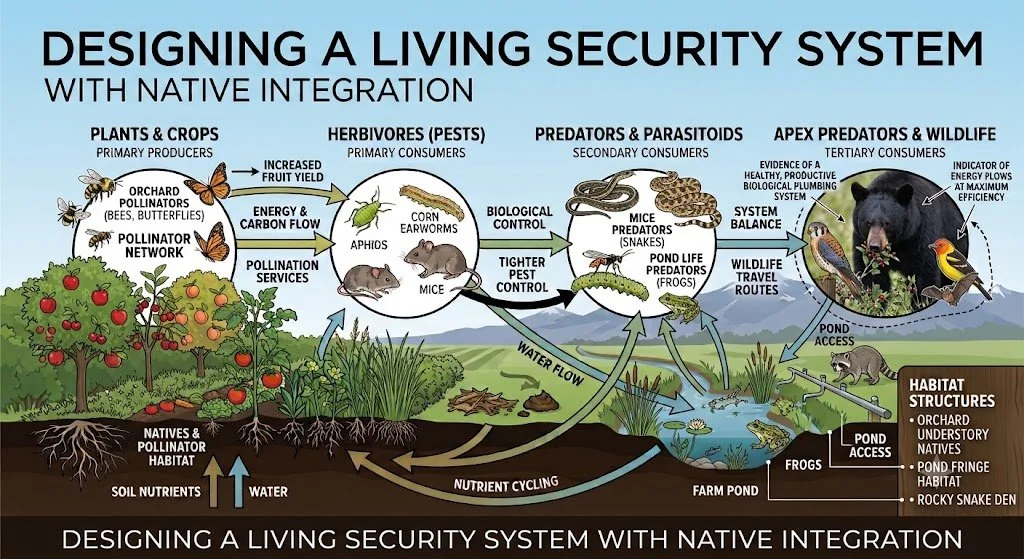
Nature isn't simply plants versus pests (a two-level system). Instead, it functions as a complex, multi-tiered food web where energy moves through many interconnected trophic levels.
Pests thrive in simple, flat landscapes—such as monocultures or manicured lawns—because these environments support fewer natural predators to keep pest populations in balance (Gravel et al., 2024; Dainese et al., 2019).
Different predators hunt in different ways and at different times. Ground beetles patrol the soil surface, spiders hunt within vegetation, parasitic wasps search from the air, birds forage during the day, and bats hunt flying insects at night. If a landscape only provides habitat for one type of predator, many pests can escape control. However, when habitats support a diverse community of predators—a concept known as predator complementarity—these natural enemies work together to suppress pests more effectively than any single species alone (Crowder et al., 2010; Gravel et al., 2024).
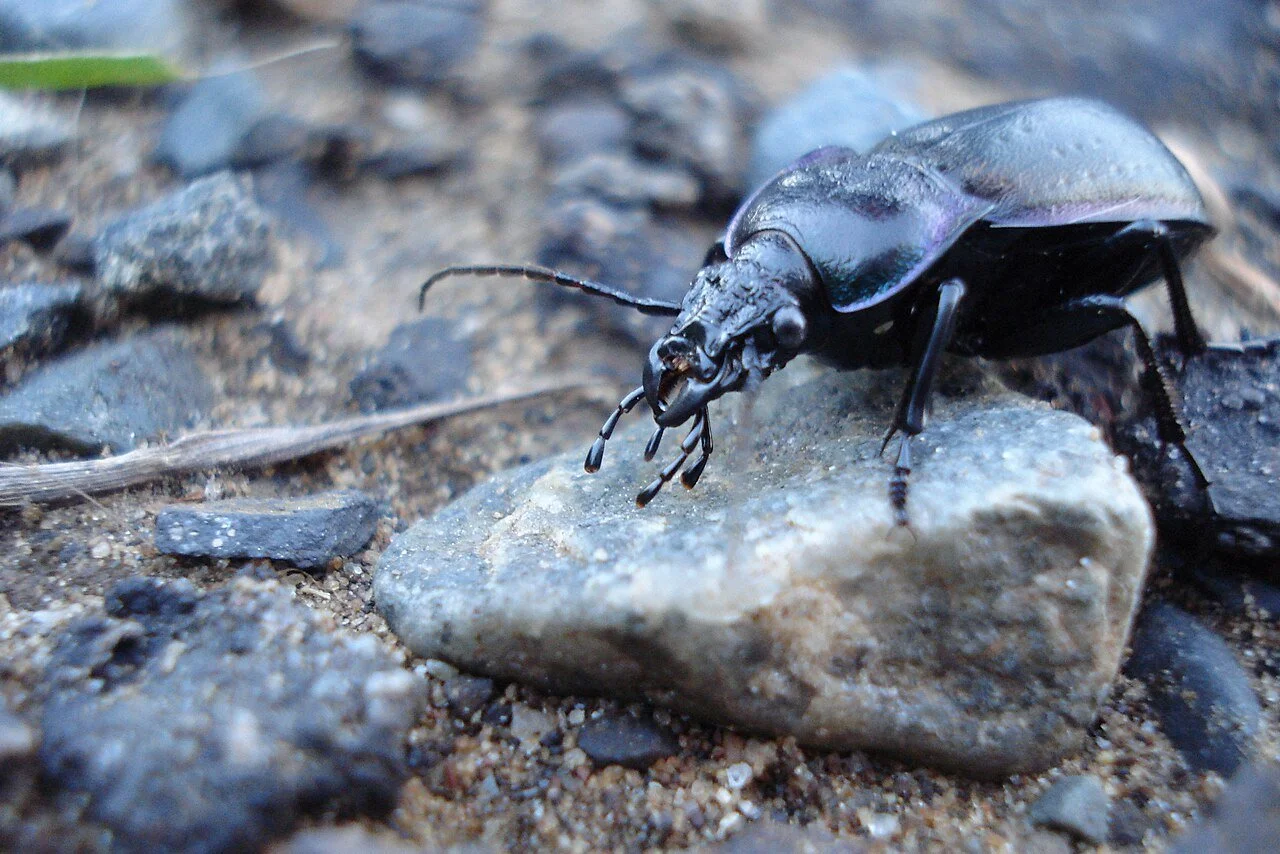
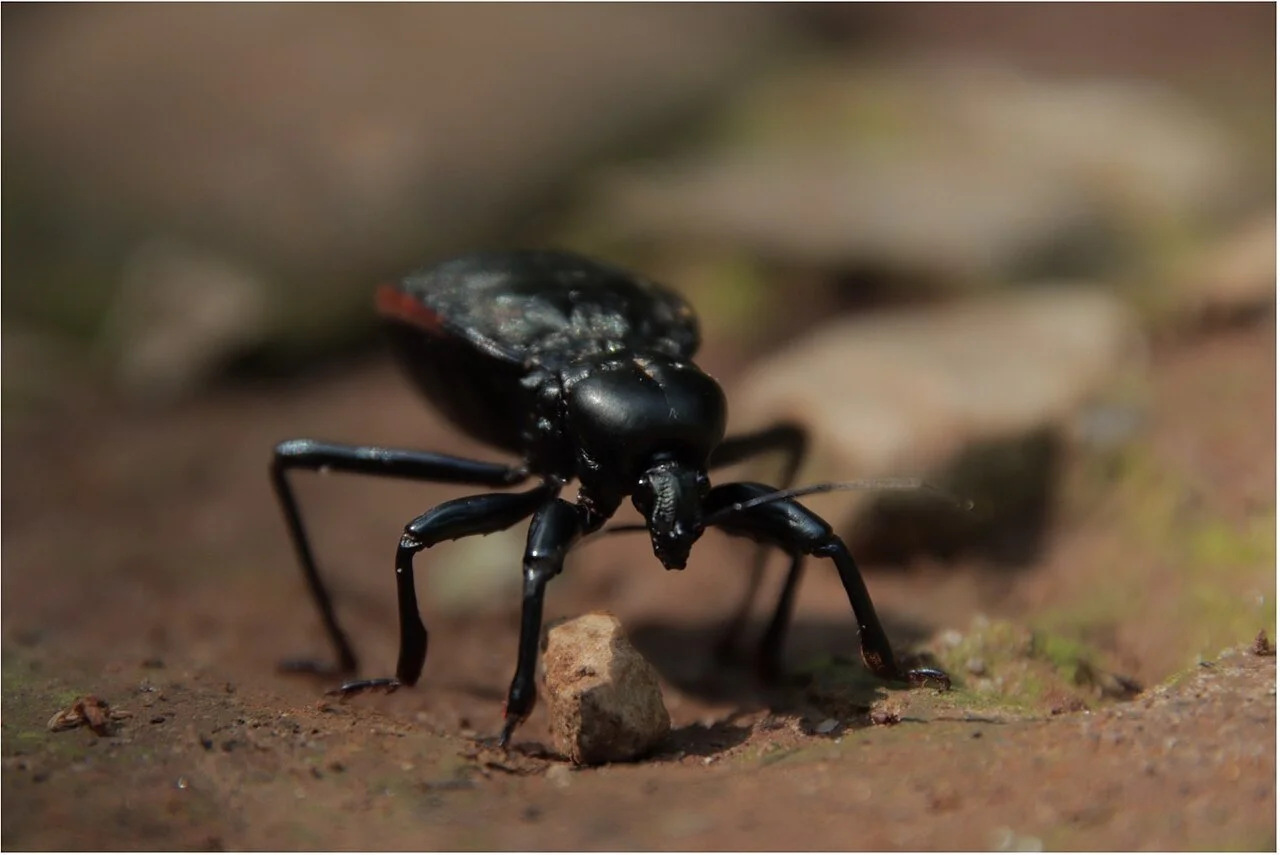
Carabus Beetles- They hunt and eat slugs, snails, worms, and small bugs.
Likewise, landscape features such as ponds, swales, berms, native hedgerows, and coarse woody debris act as ecological infrastructure—or "biological plumbing." These features slow the loss of energy from the system and provide food, water, breeding sites, and shelter that keep populations of beneficial insects, birds, amphibians, and bats healthy—even when pest numbers are naturally low (Gravel et al., 2024; Tscharntke et al., 2012).
Practical Design Principles
Here are several low-tech, science-backed design principles that can be applied to rural acreage, homesteads, or small farms.
Keep Production Close to Natural Habitat
Avoid creating large, uninterrupted production areas. Instead, keep crop fields, orchards, or garden beds within approximately 50–100 feet of permanent native habitat, hedgerows, or undisturbed refuge areas—sometimes called "beetle banks." Research consistently shows that beneficial insects and other natural enemies are more abundant and provide stronger pest suppression when crops remain close to permanent habitat (Dainese et al., 2019; Tscharntke et al., 2012).
Layer the Canopy: Build Vertical Diversity
Rather than maintaining bare soil or expansive lawns, combine overstory trees, understory shrubs, flowering plants, grasses, groundcovers, leaf litter, and healthy root systems. These layers provide habitat for multiple hunting guilds and create the vertical diversity that supports complex food webs and efficient energy flow throughout the ecosystem (Gravel et al., 2024).
Add "Live" Water
Ponds, swales, wetlands, or small moving-water features become ecological engines that support aquatic insects, which in turn provide food for dragonflies, swallows, bats, frogs, and many other beneficial predators. Maintaining these aquatic-terrestrial connections strengthens the food web and helps sustain natural pest control throughout the growing season (Gravel et al., 2024; Garibaldi et al., 2019).
Play the Long Game: Allow Ecosystems to Self-Regulate
Healthy ecosystems take time to assemble. Predator communities often require several years to establish as habitat matures and food webs become more interconnected. While this approach requires patience, research on ecological intensification shows that established systems rely far less on human intervention, require fewer purchased inputs, and can maintain productive landscapes with little or no chemical pest control (Garibaldi et al., 2019; Crowder et al., 2010).
By investing in habitat instead of pesticides, landowners can work with nature rather than against it. Healthy landscapes don't eliminate insects—they rebuild the diverse ecological relationships that naturally keep pests in balance while supporting pollinators, wildlife, and resilient food production.
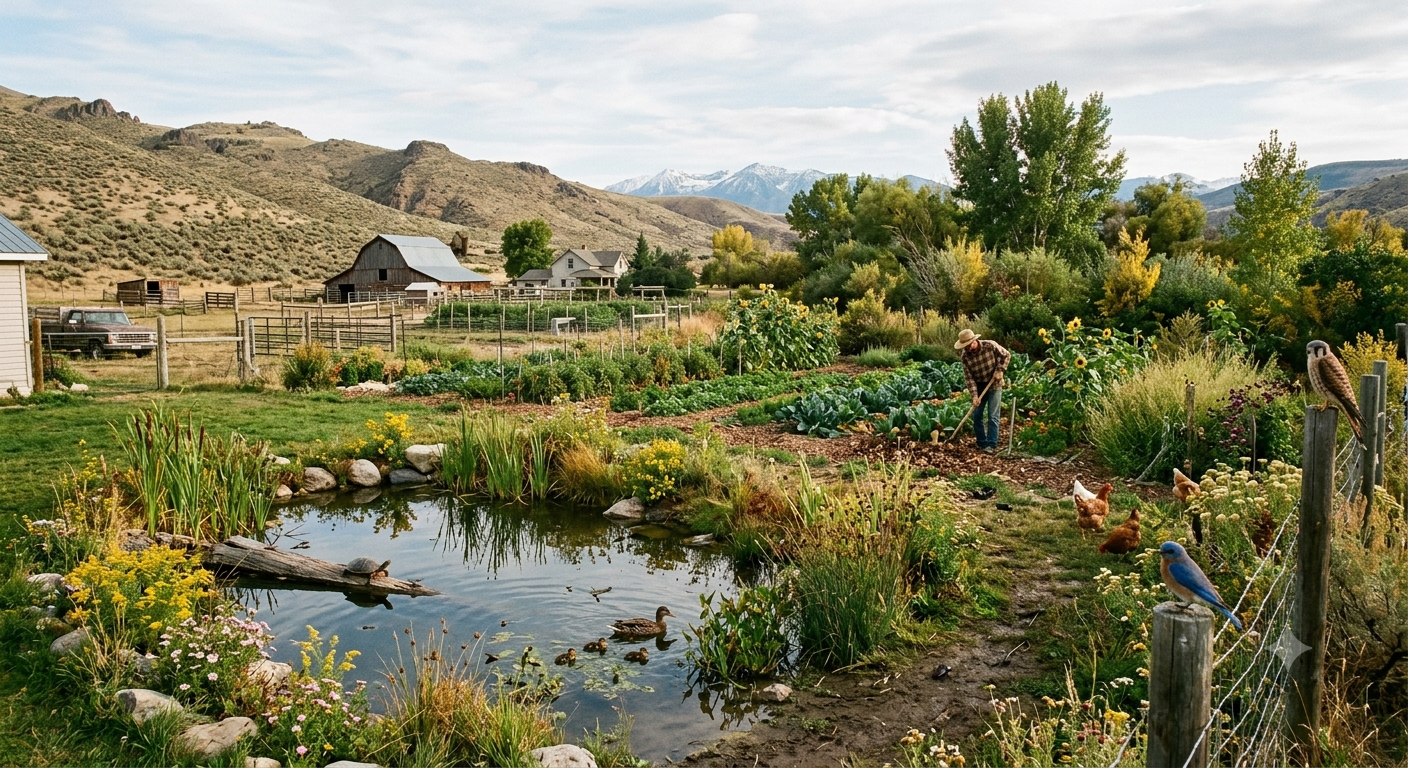
A farm integrating all of the practical design principles to create a healthy ecosystem that reduces pressure from pests on crops.
References
Crowder, D. W., et al. (2010). Organic agriculture promotes evenness and natural pest control. Nature, 466, 109–112. https://doi.org/10.1038/nature09183
Dainese, M., et al. (2019). A global synthesis reveals biodiversity-mediated benefits for crop production. Science Advances, 5(10), eaax0121. https://doi.org/10.1126/sciadv.aax0121
Garibaldi, L. A., et al. (2019). Ecological intensification to mitigate impacts of agricultural expansion. Frontiers in Ecology and the Environment, 17(1), 38–45. https://doi.org/10.1002/fee.1982
Gravel, D., et al. (2024). Land–water coupling drives the multi-trophic functioning of complex food webs. Nature, 630, 660–666. https://doi.org/10.1038/s41586-024-07498-y
Tscharntke, T., et al. (2012). Global food security, biodiversity conservation and the design of agricultural landscapes. Biological Conservation, 151(1), 53–59. https://doi.org/10.1016/j.biocon.2012.01.068